
In recent months, numerous articles have highlighted how organizations are reconsidering, or in some cases abandoning their Agile initiatives. Once perceived as a “silver bullet,” Agile is now viewed with increasing skepticism, largely because many companies have failed to realize the anticipated return on investment despite significant expenditures on mandatory trainings, Agile coaches, Scrum Masters, and related roles. Some organizations, rather than abandoning Agile altogether, have attempted to sustain momentum by relocating Agile coaches and Scrum Masters into transformation or organizational effectiveness offices. This strategy is intended to preserve agility within the enterprise, albeit in a more centralized or governance-oriented fashion.
Interestingly, many of these organizations report considerable progress: they have successfully introduced employees to the Agile mindset, documented months or even years of maturity metrics, and institutionalized various ceremonies and practices. Nevertheless, these outcomes often fail to persuade leadership to continue funding Agile initiatives. This raises a critical question: what is the missing element in these transformations?
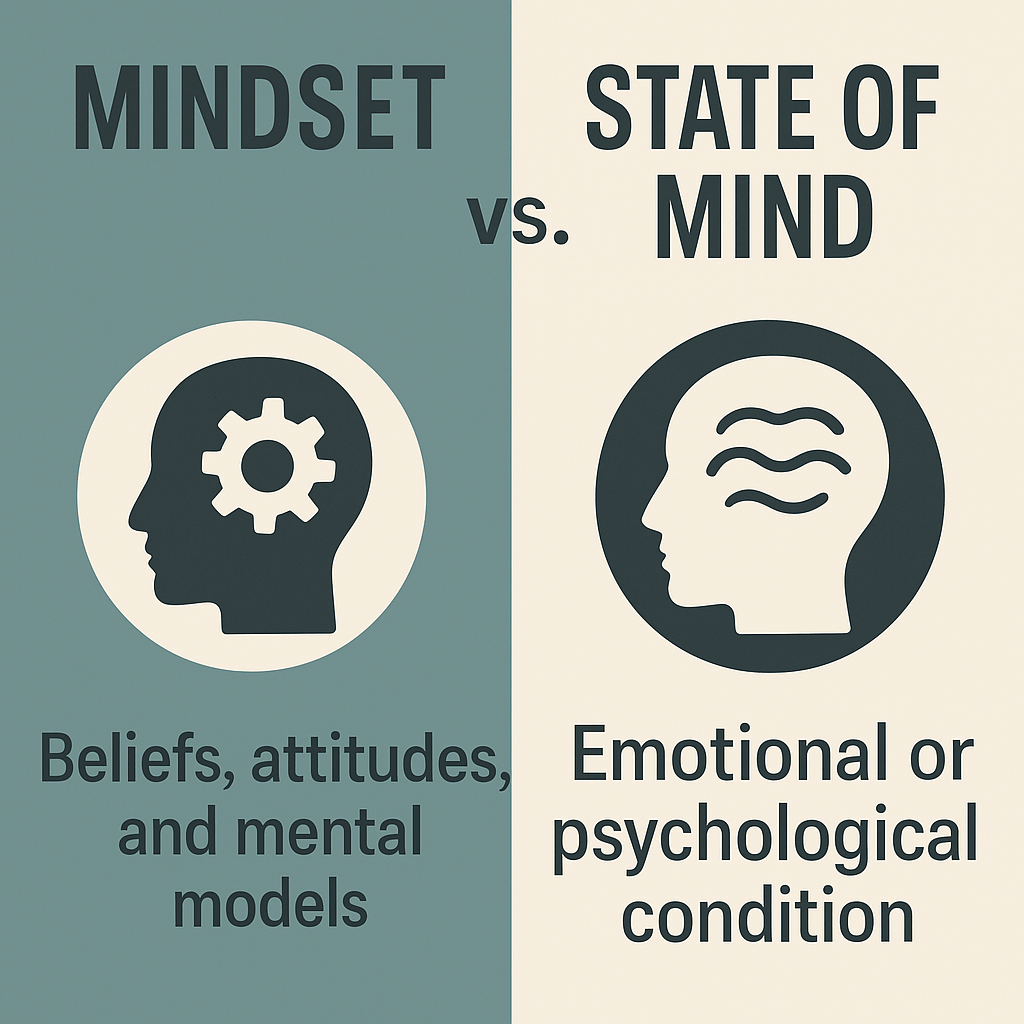
Drawing from over a decade of experience as an enterprise-level coach across multiple Fortune 500 companies, I argue that while substantial emphasis has been placed on cultivating an Agile mindset—through training, workshops, coaching, and participation in ceremonies—insufficient attention has been devoted to the concept of state of mind. To clarify the distinction:
- State of Mind: A state of mind refers to an individual’s temporary emotional or psychological condition at a given point in time. It reflects how one feels, thinks, and perceives circumstances in a particular context, influenced by factors such as stress, environment, and interpersonal dynamics.
- Mindset: A mindset is a more enduring framework of beliefs, attitudes, and mental models that shape how individuals interpret experiences, respond to challenges, and engage with the world. Unlike state of mind, it is relatively stable and habitual.
I contend that most individuals arrive at work each day with the genuine intention of performing well. Few aspire to fail, underperform, or create conflict. However, the conditions they encounter, whether in the form of the first email they open, the first task they are assigned, or the first collaboration or meeting they attend, can profoundly shape their immediate state of mind. It is within this shifting psychological landscape that the true success or failure of Agile practices is often determined. Without addressing both mindset (long-term orientation) and state of mind (moment-to-moment experience), organizations risk undermining the very agility they seek to achieve.
In a follow-up article, I will examine the factors that influence employees’ state of mind and explore how specific leadership behaviors, most notably the creation of psychological safety, directly shape this dynamic. Psychological safety, which I identified in my doctoral dissertation as the most foundational behavior of adaptive leadership, serves as a critical enabler for fostering agility and resilience in complex environments. A detailed discussion of these findings can be found here: https://imperiumconsultings.com/2025/08/21/doctorate-dissertation-for-organizational-leadership/.
 Imperium Consulting
Leave a comment